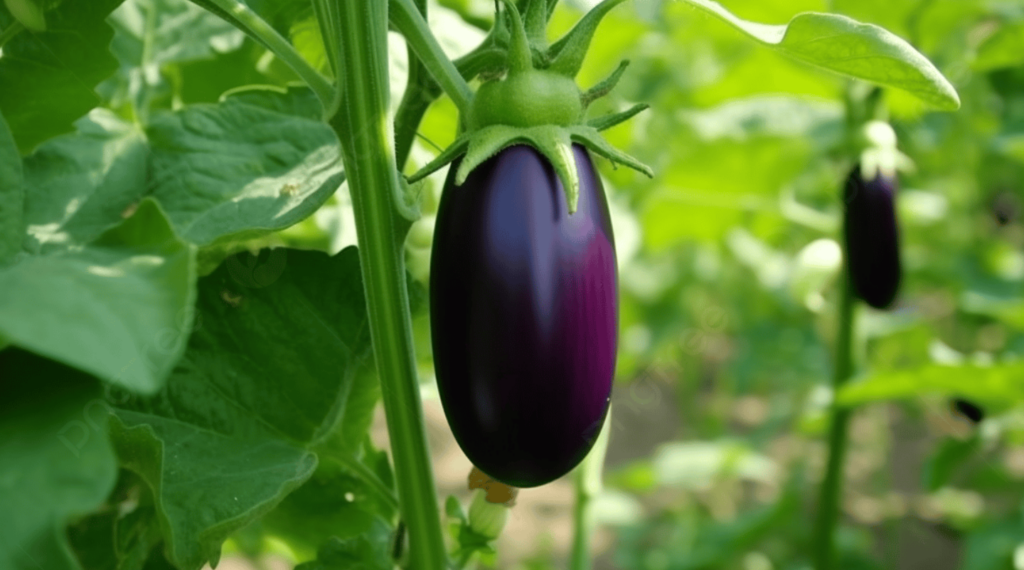
Nama Latin Solanum melongena L. Taksonomi Kingdom : Plantae Divisi : Magnoliophyta Kelas : Magnoliopsida Ordo : Solanales Famili : Solanaceae Genus : Solanum Spesies : Solanum melongena L. (Sahetapy, 2012) Definisi Umum Tanaman terong ungu (Solanum melongena L.) merupakan tanaman hortikultura dari daerah tropis yang diduga berasal dari Asia, khususnya India dan Myanmar, serta telah menyebar luas ke berbagai wilayah tropis dan subtropis dunia. Tanaman ini termasuk dalam famili Solanaceae dan mampu tumbuh dengan baik hingga ketinggian sekitar 1.200 meter di atas permukaan laut. Secara sistematika, terong tergolong ke dalam divisi Spermatophytae, subdivisi Angiospermae, kelas Dicotyledonae, ordo Tubiflorae, genus Solanum, dan spesies Solanum melongena L. (Andria, 2022). Kandungan Terong ungu (Solanum melongena L.) merupakan sayuran dengan kandungan gizi yang cukup lengkap. Dalam 100 gram terong ungu terkandung sekitar kalori 25 kkal, karbohidrat 5,5 g, lemak 1,1 g, kalsium 15 mg, fosfor 37 mg, zat besi 0,4 mg, vitamin A, vitamin B1, vitamin C, serta kadar air yang tinggi ±92,7% (Rukmanasari, 2010). Selain itu, terong juga kaya akan serat, mineral seperti magnesium dan kalium, serta senyawa bioaktif seperti antosianin dan nasunin yang berperan sebagai antioksidan (Foodreference, 2010). Kandungan fenolik pada terong diketahui mampu menangkap radikal bebas sehingga berpotensi melindungi sel dari kerusakan oksidatif (Tiwari et al., 2009) Khasiat Cara Pengolahan Terong dapat diolah dengan berbagai cara sederhana, tergantung kebutuhan konsumsi: Pengolahan yang minim minyak seperti kukus atau rebus lebih disarankan agar kandungan nutrisi, terutama antioksidan, tetap terjaga. Daftar Pustaka Andria, N. A. (2022). Pertumbuhan dan produksi tanaman terong ungu (Solanum melongena L.) dengan pemberian plant growth promoting rhizobacteria (PGPR) dan kompos tandan kosong kelapa sawit (Skripsi). Universitas Medan Area. https://repositori.uma.ac.id/handle/123456789/18911 Foodreference.com. (2010). Eggplant (aubergine) nutrition facts. https://www.foodreference.com/html/art-eggplant.html Tiwari, A., Sharma, M., & Pandey, G. (2009). Evaluation of antioxidant activity of eggplant (Solanum melongena L.). Persid, R., & Verma, S. (2014). Nutritional and antioxidant properties of eggplant (Solanum melongena L.). Rukmanasari. (2010). Kandungan gizi terong ungu. (Laporan/skripsi tidak dipublikasikan). EGGPLANT (Solanum melongena L.)Latin NameSolanum melongena L.TaxonomyKingdom: PlantaeDivision: MagnoliophytaClass: MagnoliopsidaOrder: SolanalesFamily: SolanaceaeGenus: SolanumSpecies: Solanum melongena L. (Sahetapy, 2012) General Definition The purple eggplant (Solanum melongena L.) is a tropical horticultural crop thought to have originated in Asia, particularly India and Myanmar, and has spread widely to various tropical and subtropical regions worldwide. This plant belongs to the Solanaceae family and can grow well up to an altitude of approximately 1,200 meters above sea level. Systematically, eggplant is classified in the division Spermatophytae, subdivision Angiospermae, class Dicotyledonae, order Tubiflorae, genus Solanum, and species Solanum melongena L. (Andria, 2022). Nutritional Content Purple eggplant (Solanum melongena L.) is a vegetable with a fairly complete nutritional profile. 100 grams of purple eggplant contains approximately 25 kcal of calories, 5.5 g of carbohydrates, 1.1 g of fat, 15 mg of calcium, 37 mg of phosphorus, 0.4 mg of iron, vitamins A, B1, and C, and a high water content of approximately 92.7% (Rukmanasari, 2010). Furthermore, eggplant is rich in fiber, minerals such as magnesium and potassium, and bioactive compounds such as anthocyanins and nasunin, which act as antioxidants (Foodreference, 2010). The phenolic content in eggplant is known to scavenge free radicals, potentially protecting cells from oxidative damage (Tiwari et al., 2009). Benefits Processing Methods Eggplant can be prepared in a variety of simple ways, depending on consumption needs: Preparations that use minimal oil, such as steaming or boiling, are recommended to maintain the nutritional content, especially antioxidants. Bibliography Andria, N. A. (2022). Growth and production of purple eggplant (Solanum melongena L.) with the addition of plant growth-promoting rhizobacteria (PGPR) and oil palm empty fruit bunch compost (Thesis). Medan Area University. https://repositori.uma.ac.id/handle/123456789/18911 Foodreference.com. (2010). Eggplant (aubergine) nutrition facts. https://www.foodreference.com/html/art-eggplant.html Tiwari, A., Sharma, M., & Pandey, G. (2009). Evaluation of antioxidant activity of eggplant (Solanum melongena L.). Persid, R., & Verma, S. (2014). Nutritional and antioxidant properties of eggplant (Solanum melongena L.). Rukmanasari. (2010). Nutritional content of purple eggplant. (Unpublished report/thesis).