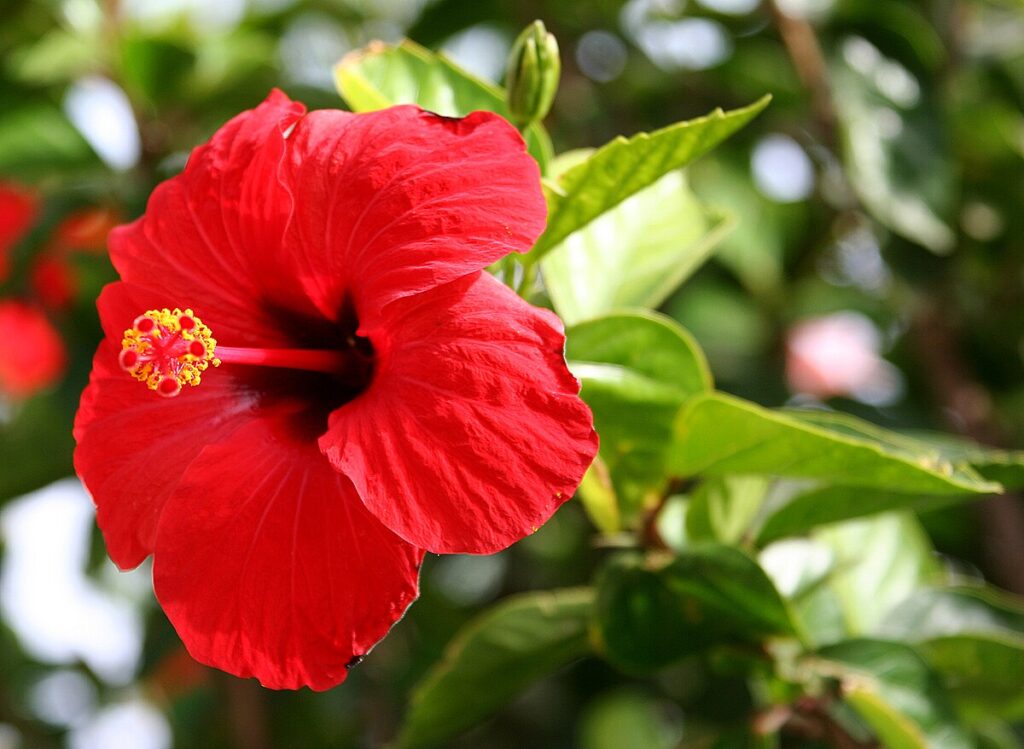
BUNGA SEPATU (Hibiscus Rosa Sinensis)
Nama Latin Hibiscus rosa sinensis Taksonomi Kingdom : Plantae Divisi : Magnoliophyta Kelas : Magnoliopsida Ordo : Malvales Famili : Malvaceae Genus : Hibiscus Spesies : Hibiscus rosa sinensis. L (Soerjani, 1987) Definisi Umum Hibiscus rosa-sinensis atau sering disebut dengan bunga kembang sepatu, banyak dijumpai di Indonesia. H. rosa-sinensis sering ditemui dengan variasi warna mahkota bunga yang beragam. Menurut penelitian dari Masnadi et al. (2019), di Hutan Taman Eden 100 yang terdapat di Kawasan Lumbang Rang, Desa Sionggang Utara, Kec. Lumban Julu, Kab. Toba Samosir Sumatera Utara, keanekaragaman dari famili Malvaceae didominasi oleh Hibiscus sp. Tingginya bisa mencapai 10 meter pada daerah subtropik (biasanya 1-2,5 meter). Daunnya agak lebar, tipis, bagian pangkalnya agak meruncing, sedangkan tepi daunnya bergerigi kasar. Selain itu daunnya berwarna hijau bersinar dan bentuknya oval lebar. Bunga kembang sepatu tumbuh sendirian, letaknya pada ketiak daun, dan warnanya bervariasi merah muda sampai merah. Memiliki mahkota daun dengan tangkai benang sari yang banyak dan berwarna merah, 4-6 putiknya terletak di ujung benang sari. Kelopaknya membentuk garis sama panjang dengan mahkota 4. Kandungan Bagian bunga, daun, dan akar kembang sepatu mengandung flavonoid. Daunnya mengandung saponin dan polifenol, akarnya mengandung tanin, saponin, skopoletin, cleomiscosin A, dan cleomiscosin C. Dan pula bunganya juga mengandung polifenol, yaitu senyawa yang menyebabkan rasa segar. Kembang sepatu dijadikan obat herbal selain tanaman obat keluarga lainnya karena kembang sepatu memiliki kandungan berbagai senyawa, yaitu tanin, alkaloid, flavonoid, taraxeryl acetat, polifenol, saponin, sianidin, glikosida, hibisetin, kuersetin, Caoksalat, dan perxidase. Senyawa inilah yang mampu melawan dan melemahkan organisme penyebab penyakit. (Efendi et al., 2021) Khasiat Kembang sepatu dapat dimanfaatkan untuk kesehatan, diantaranya sebagai pengobatan panas dalam, diabetes melitus, bronkitis, gangguan ginjal, haid tidak teratur, luka, sakit panas, demam, sariawan, batuk, gondok, dan sakit kepala. Olahan dari kembang sepatu dapat juga digunakan untuk menurunkan hipertensi, menurunkan kadar lemak, menurunkan berat badan, membasmi bakteri tubuh sebagai antiseptik serta mengandung senyawa yang dapat mencegah kanker. Cara Pengolahan Kembang sepatu dapat diolah menjadi sirup, teh dan pewarna alami, Cara penyeduhannya yaitu bunga kembang dioven atau dikeringkan kemudian, cukup melarutkan satu sendok teh bunga hibiscus kering ke air mendidih selama tiga sampai lima menit sehingga siap dikonsumsi, sebagai pewarna makanan dengan cara bunga kembang sepatu direbus selama 15 menit dan untuk ekstraksi segar dengan cara diblender dan dapat direndam dengan mie sebagai pewarna makanan. Pembuatan sirup dengan cara panas dilakukan dengan merebus 20 gram bunga kembang sepatu selama 15 sampai 20 menit, kemudian rebusan disaring dan air rebusan diminum setelah dingin. Sedangkan pengolahan bunga kembang sepatu dengan cara dingin adalah dengan melumatkan bunga pada mortar dan di tambahkan setengah gelas air matang kemudian diangin-anginkan selama semalam dan rasa pahit dapat diberikan gula atau madu. DAFTAR PUSTAKA Efendi, A., Hasibuan, M., Sihombing, E., & Wulandari, T. (2021). Bunga Kembang Sepatu Dikreasikan Untuk Kesehatan. Seminar Nasional Karya Ilmiah Multidisiplin, 1(1), 129–135. https://journal.unilak.ac.id/index.php/senkim/article/view/7750. Masnadi M, Manurung N dan Warsodirejo PP, 2019. Keanekaragaman Famili Malvaceae Di Hutan Taman Eden 100 Sebagai Bahan Perangkat Pembelajaran Biologi. BEST Journal (Biology Education, Sains and Technology), 2(2): 32-41. https://jurnal.uisu.ac.id/index.php/best/article/view/1816. Lestari, 2021. Pemahaman Masyarakat Terhadap Pemanfaatan Kembang Sepatu (Hibiscus Rosa-Sinensis L.) Sebagai Tanaman Obat Herbal. National Conference Of Islamic Natural Science Vol 2(1), 194-202 https://proceeding.iainkudus.ac.id/index.php/NCOINS/article/view/346. Oktiarni, D., Ratnawati, D., & Sari, B. (2013). Pemanfaatan Ekstrak Bunga Kembang Sepatu (Hibiscus rosa sinensis Linn.) sebagai Pewarna Alami dan Pengawet Alami Pada Mie Basah. Prosiding Semirata FMIPA Universitas Lampung, 103–110. https://www.semanticscholar.org/paper/Pemanfaatan-Ekstrak-Bunga-Kembang-Sepatu-(Hibiscus-Oktiarni-Ratnawati/1d86a7f9a565c421dce181b76753349d6a8d04be. Murrukmihadi, M. (2019). Formulasi Sirup Ekstrak Bunga Kembang Sepatu (Hibiscus Rosa-sinensis L.) Varietas Warna Merah Muda dan Uji Aktivitas Mukolitiknya pada Mukus Saluran Pernapasan Sapi secara In Vitro. Indonesia Natural Research Pharmaceutical Journal, Vol. 4(1), pp. 17-22. https://jurnal.ugm.ac.id/majalahfarmaseutik/article/view/24077. BUNGA SEPATU (Hibiscus Rosa Sinensis) Latin Name Hibiscus rosa-sinensis Taxonomy Kingdom : Plantae Division : Magnoliophyta Class : Magnoliopsida Order : Malvales Family : Malvaceae Genus : Hibiscus Species : Hibiscus rosa-sinensis L. (Soerjani, 1987) General Definition Hibiscus rosa-sinensis, commonly known as the hibiscus flower, is widely found in Indonesia. H. rosa-sinensis is often found with a wide variety of flower petal colors. According to research by Masnadi et al. (2019), in the Eden 100 Forest located in the Lumbang Rang area, Sionggang Utara Village, Lumban Julu Subdistrict, Toba Samosir Regency, North Sumatra, the diversity of the Malvaceae family is dominated by Hibiscus sp. It can grow up to 10 meters tall in subtropical regions (typically 1–2.5 meters). The leaves are somewhat broad, thin, with a slightly tapered base, and the leaf margins are coarsely toothed. Additionally, the leaves are glossy green and have a broad oval shape. Hibiscus flowers grow singly, located in the leaf axils, and their colors vary from pink to red. They have a corolla with numerous red stamens, and 4–6 pistils are located at the tips of the stamens. The sepals form a line of equal length with the corolla 4. Compounds The flowers, leaves, and roots of the hibiscus plant contain flavonoids. The leaves contain saponins and polyphenols, while the roots contain tannins, saponins, scopoletin, cleomiscosin A, and cleomiscosin C. The flowers also contain polyphenols, which are compounds that give them a fresh taste. Hibiscus is used as a herbal medicine alongside other medicinal plants because it contains various compounds, including tannins, alkaloids, flavonoids, taraxeryl acetate, polyphenols, saponins, cyanidin, glycosides, hibiscetin, quercetin, calcium oxalate, and peroxidase. These compounds are capable of combating and weakening disease-causing organisms. (Efendi et al., 2021) Benefits Hibiscus flowers can be used for health purposes, including as a treatment for internal heat, diabetes mellitus, bronchitis, kidney disorders, irregular menstruation, wounds, fever, canker sores, cough, goiter, and headaches. Hibiscus preparations can also be used to lower blood pressure, reduce fat levels, aid weight loss, eliminate bacteria as an antiseptic, and contain compounds that may help prevent cancer. Preparation Methods Hibiscus flowers can be processed into syrup, tea, and natural food coloring. To prepare the tea, the hibiscus flowers are oven-dried or air-dried; simply steep one teaspoon of dried hibiscus flowers
BUNGA SEPATU (Hibiscus Rosa Sinensis) Read More »