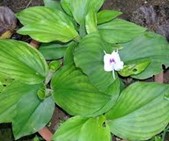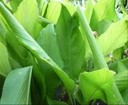
Kunyit (Curcuma domestica Val)
Nama Tumbuhan Kunyit (Curcuma domestica Val) Taksonomi Tumbuhan Kingdom : Plantae Divisi : Spermatophyta Kelas : Monocotyledonae Ordo : Zingiberales Famili : Zingiberaceae Genus : Curcuma Spesies : Curcuma domestica Val (Kusbianto dan Purwaningrum, 2018) Definisi Umum Kunyit (Curcuma longa L.) adalah tanaman herba tahunan dari famili Zingiberaceae yang dikenal luas sebagai rempah dan bahan tradisional. Kulit rimpang kunyit berwarna jingga kecokelatan, sementara bagian dalam rimpangnya memiliki warna merah jingga hingga jingga kekuningan. Rimpang induk memiliki rasa pahit dan getir, sedangkan rimpang muda cenderung berasa sedikit manis dengan aroma yang khas (Handayani et al., 2023). Tanaman kunyit mampu berkembang di berbagai wilayah, mulai dari dataran rendah hingga dataran tinggi dengan ketinggian antara 0 hingga 240 meter di atas permukaan laut. ketinggian sekitar 45 meter di atas permukaan laut merupakan kondisi ideal bagi pertumbuhan maksimal kunyit. Tanah yang gembur sangat mendukung kesuburan tanaman ini, dengan jenis tanah yang paling sesuai meliputi latosol, alluvial, dan regosol (Shapna et al., 2023). Kandungan Kunyit memiliki senyawa berkhasiat obat yang dikenal sebagai kurkuminoid, meliputi kurkumin, desmetoksikurkumin sekitar 10%, serta bisdesmetoksikurkumin sebanyak 1–5%. Selain itu, kunyit juga mengandung berbagai zat bermanfaat lainnya, seperti minyak atsiri yang tersusun atas keton seskuiterpen, turmeron, tumeon 60%, zingiberen 25%, felandren, sabinen, borneol, dan sineil (Kusbianto dan Purwaningrum, 2018). Khasiat Rimpang kunyit berkhasiat sebagai obat tradisional yang dapat digunakan untuk mengobati luka, bersifat antibakteri, mengurangi pergerakan usus, menghilangkan bau badan, menurunkan demam, meredakan diare, serta berbagai pengobatan lainnya (Prabowo et al., 2019). Cara Pengolahan Untuk membuat minuman herbal dari kunyit, diperlukan bahan-bahan berupa ½ kg kunyit segar, ¼ bagian gula jawa, ½ kg asam jawa, 2 liter air, dan seujung sendok teh garam. Langkah pertama adalah mengupas kulit kunyit, mencucinya hingga bersih, lalu menghaluskannya dengan cara diparut atau diblender. Setelah itu, air perasan kunyit direbus bersama asam jawa, gula jawa, dan garam hingga campuran benar-benar mendidih, sambil terus diaduk agar merata. Jika sudah mendidih, rebusan tersebut diangkat dan didinginkan sebelum disajikan (Ismawati et al., 2020). Daftar Pustaka Kusbianto, D., & Purwaningrum, Y. (2018). Pemanfaatan Kandungan Metabolit Sekunder pada Tanaman Kunyit dalam Mendukung Peningkatan Pendapatan Masyarakat. Jurnal Kultivasi, 17(1), 554-549. https://doi.org/10.24198/kultivasi.v17i1.15669 Shapna, N., Rahmawati, Y., Munggali, U., & Iemaaniah, Z. M. (2023). Pendampingan Penanaman Tanaman Kunyit (curcuma domestica val) Menggunakan Polybag di Desa Sukadana Lombok Tengah. Jurnal Siar Ilmuwan Tani, 4(2), 268-273. https://doi.org/10.29303/jsit.v4i2.119 Prabowo, H., Cahya, I. A. P. D., Arisanti, C. I. S., & Samirana, P. O. (2019). Standardisasi spesifik dan non-spesifik simplisia dan ekstrak etanol 96% rimpang kunyit (Curcuma domestica Val.). Jurnal Farmasi Udayana, 8(1), 29-35. https://doi.org/10.24843/JFU.2019.v08.i01.p05 Handayani, D., Halimatushadyah, E., & Krismayadi, K. (2023). Standarisasi mutu simplisia rimpang kunyit dan ekstrak etanol rimpang kunyit (Curcuma longa Linn). Pharmacy Genius, 2(1), 43-59. https://doi.org/10.56359/pharmgen.v2i1.173 Ismawati, S. M., Pratiwi, V., Partono, M., & Abdi, M. J. (2020). Sosialisasi Pembuatan Jamu Kunyit Sebagai Obat Tradisional Masyarakat Di Desa Belimbing Baru, Kecamatan Sungai Pinang, Kabupaten Banjar. Jurnal Pendidikan Sosiologi Antropologi), 2(2), 235-246. https://doi.org/10.20527/padaringan.v2i2.2153 Turmeric (Curcuma domestica Val) Plant Name Turmeric (Curcuma domestica Val) Plant Taxonomy Kingdom: Plantae Division: Spermatophyta Class: Monocotyledonae Order: Zingiberales Family: Zingiberaceae Genus: Curcuma Species: Curcuma domestica Val (Kusbianto and Purwaningrum, 2018) General Definition Turmeric (Curcuma longa L.) is a perennial herb from the Zingiberaceae family, widely known as a spice and traditional ingredient. The skin of turmeric rhizomes is orange-brown, while the inside ranges from reddish-orange to yellow-orange. The mother rhizome has a bitter and astringent taste, whereas the young rhizome tends to be slightly sweet with a distinct aroma (Handayani et al., 2023). Turmeric plants can grow in various regions, from lowlands to highlands at altitudes between 0 and 240 meters above sea level, with around 45 meters above sea level being ideal for optimal growth. Loose soil greatly supports the fertility of this plant, with the most suitable soil types including latosol, alluvial, and regosol (Shapna et al., 2023). Contents Turmeric contains medicinal compounds known as curcuminoids, including curcumin, desmethoxycurcumin at around 10%, and bisdesmethoxycurcumin at 1–5%. In addition, turmeric also contains various other beneficial substances, such as essential oils composed of sesquiterpene ketones, turmerone, tumeone 60%, zingiberene 25%, phellandrene, sabinene, borneol, and cineole (Kusbianto and Purwaningrum, 2018). Benefits Turmeric rhizome is useful as a traditional medicine that can be used to treat wounds, has antibacterial properties, reduces intestinal movement, removes body odor, lowers fever, relieves diarrhea, and for various other treatments (Prabowo et al., 2019). How to Prepare To make a herbal drink from turmeric, you’ll need ingredients such as ½ kg of fresh turmeric, ¼ portion of palm sugar, ½ kg of tamarind, 2 liters of water, and a pinch of salt. The first step is to peel the turmeric, wash it until clean, then grind it either by grating or blending. After that, the turmeric juice is boiled together with tamarind, palm sugar, and salt until the mixture comes to a full boil, stirring continuously to mix well. Once it boils, take the pot off the heat and let it cool before serving (Ismawati et al., 2020). References Kusbianto, D., & Purwaningrum, Y. (2018). Utilization of Secondary Metabolite Content in Turmeric Plants to Support Increasing Community Income. Kultivasi Journal, 17(1), 554-549. https://doi.org/10.24198/kultivasi.v17i1.15669 Shapna, N., Rahmawati, Y., Munggali, U., & Iemaaniah, Z. M. (2023). Assistance in Planting Turmeric (Curcuma domestica Val) Using Polybags in Sukadana Village, Central Lombok. Journal of Siar Ilmuwan Tani, 4(2), 268-273. https://doi.org/10.29303/jsit.v4i2.119 Prabowo, H., Cahya, I. A. P. D., Arisanti, C. I. S., & Samirana, P. O. (2019). Specific and Non-Specific Standardization of Dried Turmeric Rhizomes and 96% Ethanol Extract (Curcuma domestica Val.). Udayana Pharmacy Journal, 8(1), 29-35. https://doi.org/10.24843/JFU.2019.v08.i01.p05 Handayani, D., Halimatushadyah, E., & Krismayadi, K. (2023). Quality standardization of turmeric rhizome simplisia and ethanol extract of turmeric rhizomes (Curcuma longa Linn). Pharmacy Genius, 2(1), 43-59. https://doi.org/10.56359/pharmgen.v2i1.173 Ismawati, S. M., Pratiwi, V., Partono, M., & Abdi, M. J. (2020). Socialization of Making Turmeric Jamu as a Traditional Medicine for the Community in Belimbing Baru Village, Sungai Pinang District, Banjar Regency. Journal of Sociology and Anthropology Education, 2(2), 235-246. https://doi.org/10.20527/padaringan.v2i2.2153
Kunyit (Curcuma domestica Val) Read More »