
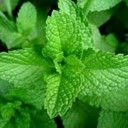
Nama Tumbuhan
Daun Mint (Mentha Cordifolia)
Taksonomi Tumbuhan
Kingdom : Plantae
Divisi : Magnoliophyta
Kelas : Magnoliopsida
Ordo : Lamiales
Famili : Lamiaceae
Genus : Mentha
Spesies : Mentha Cordifolia
(USDA, 2009)
Definisi Umum
Daun mint (Mentha piperita L.) adalah salah satu jenis tanaman herbal dari keluarga Lamiaceae yang dikenal dengan aroma segar dan rasa khasnya yang menyejukkan (Pratiwi et al., 2019). Tanaman ini berasal dari wilayah Eropa dan Asia Barat, namun kini telah tersebar luas ke berbagai belahan dunia, termasuk kawasan tropis dan subtropis seperti Indonesia. Mint umumnya tumbuh baik di daerah dengan iklim sejuk hingga hangat, pada tanah yang gembur, subur, dan memiliki drainase baik, serta membutuhkan paparan sinar matahari yang cukup (Yousefian et al., 2023). Secara morfologis, Mentha cordifolia memiliki batang tegak atau merambat dengan ruas yang jelas, daun berbentuk lonjong hingga oval dengan tepi bergerigi halus, serta di pangkalnya dengan daun puber dan berurat tebal, dan permukaan daun berwarna hijau dengan tekstur sedikit berbulu. Bunganya berwarna ungu pucat atau keputihan yang tersusun dalam bentuk tandan di ujung batang (Salehi et al., 2018).
Kandungan
Daun mint mengandung senyawa aktif seperti mentol, menton, dan flavonoid yang dapat membantu mengurangi peradangan (Purwaeni et al., 2025). Aroma wangi daun mint disebabkan kandungan minyak atsiri berupa minyak mentol. Daun mint juga mengandung vitamin C, provitamin A, fosfor, zat besi, kalsium, potassium, serat, klorofil dan fitonutrien (Setiawan et al., 2019).
Khasiat
Daun mint memiliki khasiat untuk mengobati batuk, flu, demam, mabuk perjalanan, gangguan gastrointestinal, asma, kejang otot, dan antiinflamasi (Chamnanthongpiwan et al., 2021). Selain itu, daun mint juga dapat untuk mengendalikan diabetes dan obesitas. Selain itu juga dapat digunakan untuk efek antialergi, efek antijamur dan antibakteri, efek antidiabetik, efek antikarsinogenik, dan pereda nyeri
(Saqib et al., 2022).
Cara Pengolahan
Pengolahan daun mint secara tradisional dapat dibuat menjadi teh daun mint. Daun mint segar dicuci bersih, lalu dikeringkan (bisa dengan dijemur atau menggunakan oven dengan suhu terkontrol), lalu bisa dihaluskan menjadi bubuk atau langsung diseduh dengan air panas untuk membuat teh daun mint (Sucianti et al., 2021).
Daftar Pustaka
Chamnanthongpiwan, P., Palanuvej, C., & Ruangrungsi, N. (2021). Pharmacognostic Specification Of Mentha Cordifolia Leaf And Stem With Special Reference To Rosmarinic Acid Contents. Interprofessional Journal of Health Sciences, 19(1), 33-44. https://li05.tci-thaijo.org/index.php/IJHS/article/view/45.
Pratiwi, P. Y., Mardiyaningsih, A., & Widarti, E. (2019). Perbedaan kualitas tanaman mint (Mentha spicata L) hidroponik dan konvensional berdasarkan morfologi tanaman, profil kromatogram, dan kadar minyak atsiri. Jurnal Riset Kefarmasian Indonesia, 1(2), 148-156. https://doi.org/10.33759/jrki.v1i2.18.
Purwaeni, P., Aliansy, D., Jaojah, S., Aulia, R. N., Meilasari, R. N., Pertiwi, D. Y., & Carla, N. C. (2025). Formulasi dan Evaluasi Sediaan Harmoni Dada: Inovasi Minyak Perawatan Payudara Berkhasiat pada Ibu Menyusui dari Minyak Atsiri Daun Mint (Mentha piperita). Generics: Journal of Research in Pharmacy, 5(1), 99-109. https://doi.org/10.14710/genres.v5i1.25570.
Salehi, B., Stojanović-Radić, Z., Matejić, J., Sharopov, F., Antolak, H., Kręgiel, D., … & Sharifi-Rad, J. (2018). Plants of genus Mentha: From farm to food factory. Plants, 7(3), 70. https://doi.org/10.3390/plants7030070.
Saqib, S., Ullah, F., Naeem, M., Younas, M., Ayaz, A., Ali, S., & Zaman, W. (2022). Mentha: Nutritional and health attributes to treat various ailments including cardiovascular diseases. Molecules, 27(19), 6728. https://doi.org/10.3390/molecules27196728.
Setiawan, A., Kunarto, B., & Sani, E. Y. (2019). Ekstraksi daun peppermint (Mentha piperita L.) menggunakan metode microwave assisted extraction terhadap total fenolik, tanin, flavonoid dan aktivitas antioksidan. Jurnal Teknologi Hasil Pertanian, 1(1), 1-9. https://repository.usm.ac.id/files/journalmhs/D.131.14.0008-20190305012656.pdf.
Sucianti, A., Yusa, N. M., & Sughita, I. M. (2021). Pengaruh suhu pengeringan terhadap aktivitas antioksidan dan karakteristik teh celup herbal daun mint (Mentha piperita L.). Jurnal Ilmu Dan Teknologi Pangan (ITEPA), 10(3), 378-388. https://doi.org/10.24843/itepa.2021.v10.i03.p06.
Yousefian, S., Esmaeili, F., & Lohrasebi, T. (2023). A comprehensive review of the key characteristics of the Genus Mentha, Natural compounds and Biotechnological approaches for the production of secondary metabolites. Iranian Journal of Biotechnology, 21(4), e3605. https://doi.org/10.30498/ijb.2023.380485.3605.
Mint Leaves (Mentha Cordifolia)
Plant Name
Mint Leaves (Mentha cordifolia)
Plant Taxonomy
Kingdom: Plantae
Division: Magnoliophyta
Class: Magnoliopsida
Order: Lamiales
Family: Lamiaceae
Genus: Mentha
Species: Mentha Cordifolia
(USDA, 2009)
General Definition
Peppermint (Mentha piperita L.) is a type of herbaceous plant in the Lamiaceae family known for its fresh aroma and distinctive, refreshing flavor (Pratiwi et al., 2019). This plant is native to Europe and Western Asia, but has now spread widely to various parts of the world, including tropical and subtropical regions such as Indonesia. Mint generally grows well in areas with cool to warm climates, in loose, fertile soil with good drainage, and requires sufficient sunlight (Yousefian et al., 2023). Morphologically, Mentha cordifolia has erect or trailing stems with distinct nodes, leaves that are oblong to oval with finely serrated edges, and at the base, the leaves are pubescent and thick-veined, with a green surface and a slightly hairy texture. The flowers are pale purple or whitish, arranged in clusters at the tips of the stems (Salehi et al., 2018).
Composition
Mint leaves contain active compounds such as menthol, menthone, and flavonoids that can help reduce inflammation (Purwaeni et al., 2025). The fragrant aroma of mint leaves is due to their essential oil content, specifically menthol. Mint leaves also contain vitamin C, provitamin A, phosphorus, iron, calcium, potassium, fiber, chlorophyll, and phytonutrients (Setiawan et al., 2019).
Benefits
Mint leaves are beneficial for treating coughs, the flu, fever, motion sickness, gastrointestinal disorders, asthma, muscle spasms, and have anti-inflammatory properties (Chamnanthongpiwan et al., 2021). Additionally, mint leaves can help manage diabetes and obesity. They can also be used for their anti-allergic, antifungal, and antibacterial effects, as well as their antidiabetic, anticarcinogenic, and pain-relieving properties (Saqib et al., 2022).
Processing Methods
Traditionally, mint leaves can be processed into mint tea. Fresh mint leaves are washed thoroughly, then dried (either by sun-drying or using a controlled-temperature oven), and can then be ground into a powder or brewed directly with hot water to make mint tea (Sucianti et al., 2021).
References
Chamnanthongpiwan, P., Palanuvej, C., & Ruangrungsi, N. (2021). Pharmacognostic Specification of Mentha cordifolia Leaves and Stems with Special Reference to Rosmarinic Acid Content. Interprofessional Journal of Health Sciences, 19(1), 33-44. https://li05.tci-thaijo.org/index.php/IJHS/article/view/45.
Pratiwi, P. Y., Mardiyaningsih, A., & Widarti, E. (2019). Differences in the quality of hydroponically and conventionally grown mint (Mentha spicata L) based on plant morphology, chromatogram profiles, and essential oil content. Indonesian Journal of Pharmaceutical Research, 1(2), 148-156. https://doi.org/10.33759/jrki.v1i2.18.
Purwaeni, P., Aliansy, D., Jaojah, S., Aulia, R. N., Meilasari, R. N., Pertiwi, D. Y., & Carla, N. C. (2025). Formulation and Evaluation of Harmoni Dada: An Innovative Breast Care Oil for Breastfeeding Mothers Made from Peppermint (Mentha piperita) Essential Oil. Generics: Journal of Research in Pharmacy, 5(1), 99-109. https://doi.org/10.14710/genres.v5i1.25570.
Salehi, B., Stojanović-Radić, Z., Matejić, J., Sharopov, F., Antolak, H., Kręgiel, D., … & Sharifi-Rad, J. (2018). Plants of the genus Mentha: From farm to food factory. Plants, 7(3), 70. https://doi.org/10.3390/plants7030070.
Saqib, S., Ullah, F., Naeem, M., Younas, M., Ayaz, A., Ali, S., & Zaman, W. (2022). Mentha: Nutritional and health attributes for treating various ailments, including cardiovascular diseases. Molecules, 27(19), 6728. https://doi.org/10.3390/molecules27196728.
Setiawan, A., Kunarto, B., & Sani, E. Y. (2019). Extraction of peppermint leaves (Mentha piperita L.) using the microwave-assisted extraction method for total phenolics, tannins, flavonoids, and antioxidant activity. Journal of Agricultural Product Technology, 1(1), 1-9. https://repository.usm.ac.id/files/journalmhs/D.131.14.0008-20190305012656.pdf.
Sucianti, A., Yusa, N. M., & Sughita, I. M. (2021). The effect of drying temperature on the antioxidant activity and characteristics of herbal mint leaf (Mentha piperita L.) tea bags. Journal of Food Science and Technology (ITEPA), 10(3), 378-388. https://doi.org/10.24843/itepa.2021.v10.i03.p06.
Yousefian, S., Esmaeili, F., & Lohrasebi, T. (2023). A comprehensive review of the key characteristics of the Genus Mentha, natural compounds, and biotechnological approaches for the production of secondary metabolites. Iranian Journal of Biotechnology, 21(4), e3605. https://doi.org/10.30498/ijb.2023.380485.3605.