
Nama Latin
(Graptophyllum pictum)
Taksonomi
Kingdom : Plantae
Divisi : Magnoliophyta
Kelas : Magnoliopsida
Ordo : Scorpulariales
Famili : Acanthaceae
Genus : Graptophylum
Spesies : Graptophyllum pictum (L.) Griff (Griff et al., 2021)
Definisi Umum
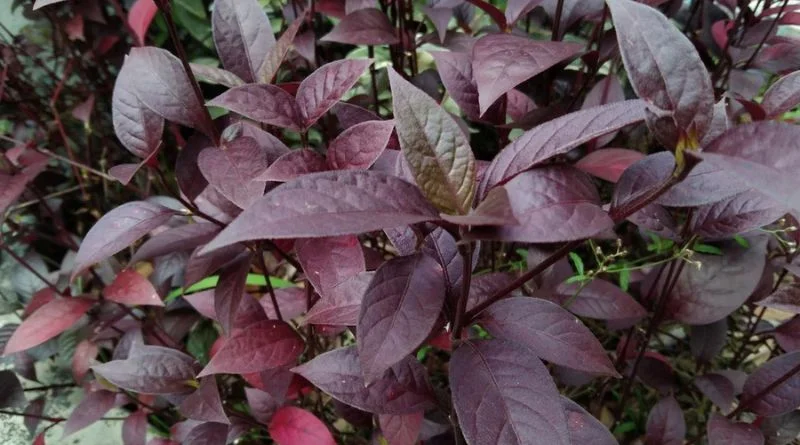
Graptophyllum pictum yang juga dikenal sebagai ‘Daun Ungu’, ‘handeuleum’, dan ‘tulak’ di Indonesia merupakan tumbuhan asal Papua Nugini yang termasuk ke dalam famili Acanthaceae (Goswami et al., 2021). Daun ungu (Graptophyllum pictum L. Griff) merupakan tumbuhan perdu dengan tinggi 1,5-3 m dan tidak berambut. Terdapat lendir pada kulit dan daunnya. Daunnya tunggal, bertangkai pendek dan terletak berhadapan bersilangan. Panjang daun kira-kira 8-20 cm dengan lebar 3-13 cm, bentuk bulat telur hingga lanset dengan tepi bergelombang dan ujung pangkal runcing. Nama lokal dari Graptophyllum pictum yaitu pudding hitam, daun wungu (Wibowo et al., 2021).
Kandungan
Daun ungu ini terdapat kandungan fenolik dalam daun ungu seperti alkaloid, saponin, tannin dan flavonoid (Dewi et al., 2023)
Khasiat
Tanaman daun ungu memiliki berbagai aktivitas farmakologi diantaranya yaitu antioksidan, antiinflamasi, antidiabetes, analgesik, photoprotective, imunomodulator, nefroprotektif, antihemoroid, dan antibakteri (Griff et al., 2021). Daun ungu dimanfaatkan sebagai obat diuretik (batang atau daunnya), bunganya untuk melancarkan haid, dan daunnya digunakan dalam pengobatan antiinflamasi, pengobatan sembelit, ambeien, antireumatik, pengobatan bisul, dan berperan sebagai pencahar ringan. Penyembuhan dilakukan dengan meminum rebusan daun ungu sekali dalam sehari dan dilakukan setiap pagi secara rutin (Dewi et al., 2023).
Cara Pengolahan
Cara pengolahan daun ungu yang paling umum didokumentasikan dalam literatur pengobatan tradisional adalah melalui metode perebusan atau dekokta (Sartika & Indradi, 2021). Untuk penggunaan internal, daun segar direbus dengan air hingga volumenya menyusut untuk mengekstraksi senyawa aktif yang larut air (Meilani et al., 2023). Sedangkan untuk penggunaan eksternal seperti mengobati bisul, daun ungu dapat diolah dengan cara ditumbuk halus dan ditempelkan langsung pada area yang sakit sebagai tapal (Safitri, 2021).
Daftar Isi
Dewi, P., Zahirah, F., Rahman, A., Wirawan, W., & Ungu, D. (2023). Edukasi Pembuatan Seduhan Daun Ungu untuk Atasi Wasir Di Desa Maku Kecamatan Dolo, KabupatenSigi,SulawesiTengah.2(2),16–21. https://doi.org/10.47701/abdimas.v2i2.2770
Goswami, M., Ojha, A., & Mehra, M. (2021). A Narrative literature review on Phytopharmacology of a Caricature Plant: Graptophyllum pictum (L.) Griff. (Syn: Justicia picta Linn.). Asian Pacific Journal of Health Sciences, 8 (9), 44–47. https://doi.org/10.21276/apjhs.20 21.8.3.10
Griff, G. L., Sartika, S., Indradi, R. B., & Griff, G. L. (2021). Pharmacological Activities of Daun Ungu Plants Berbagai Aktivitas Farmakologi Tanaman Daun Ungu. 1(2), 88–96. https://doi.org/10.24198/ijbp.v1i2.37531
Meilani, D., Miranda, N. A., & Harahap, N. (2023). Utilization Of Ethanol Extract Of Wungu Leaf (Graptophyllum Pictum (L) Griff) Growing In The Pamah Deli Old Area As An Anti-Inflammatory. Indonesian Journal of Science and Pharmacy, 1 (2), 58–63. https://doi.org/10.33024/jikk.v12i7.20260
Safitri, S. (2021). Pengaruh Ekstrak Daun Wungu (Graptophyllum pictum L.) Terhadap Pertumbuhan Bakteri Penyebab Jerawat (Staphylococcus aureus). Jurnal Ilmu Kedokteran Dan Kesehatan, 8 (1), 25–33. https://doi.org/10.63763/ijsp.v1i2.20
Sartika, I., & Indradi, S. (2021). Berbagai Aktivitas Farmakologi Tanaman Daun Ungu (Graptophyllum pictum L. Griff). Indonesian Journal of Biological Pharmacy, 1 (2), 88–96. https://doi.org/10.24198/ijbp.v1i2.37531.g16953
Wibowo, D., Ismayadi, P., & Wati, D. (2021). Tanaman Obat Desa Air Selimang, kecamatan Seberang Musi, Kabupaten Kepahyang,Bengukulu, Indonesia. Bengkulu:Deepublish.https://pustaka.uniraya.ac.id/index.php?p=show_detail&id=4230
Purple Leaf (Graptophyllum pictum)
Latin name

(Graptophyllum pictum)

Taxonomy

Kingdom     : Plantae

Division           : Magnoliophyta

Class           : Magnoliopsida

Order         : Scorpulariales

Family          : Acanthaceae

Genus          : Graptophylum

Species        : Graptophyllum pictum (L.) Griff  (Griff et al., 2021)
General Definition

Graptophyllum pictum, also known as 'Purple Leaf', 'handeuleum', and 'tulak' in Indonesia, is a plant native to Papua New Guinea and belongs to the Acanthaceae family (Goswami et al., 2021). Purple Leaf (Graptophyllum pictum L. Griff) is a hairless, shrubby plant growing 1.5-3 m tall. It has a slime on its skin and leaves. The leaves are single, short-stemmed, and arranged oppositely. The leaves are approximately 8-20 cm long and 3-13 cm wide, ovate to lanceolate in shape with wavy edges and a pointed base. Local names for Graptophyllum pictum include black pudding and purple leaves (Wibowo et al., 2021).
Content

Purple leaves contain phenolic compounds such as alkaloids, saponins, tannins, and flavonoids (Dewi et al., 2023).

Benefits

The purple leaf plant has various pharmacological activities, including antioxidant, anti-inflammatory, antidiabetic, analgesic, photoprotective, immunomodulatory, nephroprotective, antihemorrhoidal, and antibacterial properties (Griff et al., 2021). Purple leaves are used as a diuretic (either the stem or the leaves), the flowers are used to regulate menstruation, and the leaves are used as an anti-inflammatory, to treat constipation and hemorrhoids, as an antirheumatic, to treat boils, and as a mild laxative. Healing is achieved by drinking a decoction of purple leaves once daily, regularly every morning (Dewi et al., 2023).
Processing Methods

The most common method of processing purple leaves documented in traditional medicine literature is through boiling or decoction (Sartika & Indradi, 2021). For internal use, fresh leaves are boiled in water until their volume reduces to extract the water-soluble active compounds (Meilani et al., 2023). For external use, such as treating boils, purple leaves can be finely ground and applied directly to the affected area as a poultice (Safitri, 2021).
Table of Contents

Dewi, P., Zahirah, F., Rahman, A., Wirawan, W., & Ungu, D. (2023). Education on Making Purple Leaf Infusion to Treat Hemorrhoids in Maku Village, Dolo District, Sigi Regency, Central Sulawesi. 2(2), 16–21. https://doi.org/10.47701/abdimas.v2i2.2770

Goswami, M., Ojha, A., & Mehra, M. (2021). A Narrative Literature Review on the Phytopharmacology of a Caricature Plant: Graptophyllum pictum (L.) Griff. (Syn: Justicia picta Linn.). Asian Pacific Journal of Health Sciences, 8(9), 44–47. https://doi.org/10.21276/apjhs.20 21.8.3.10

Griff, G. L., Sartika, S., Indradi, R. B., & Griff, G. L. (2021). Pharmacological Activities of Purple Leaf Plants. 1(2), 88–96. https://doi.org/10.24198/ijbp.v1i2.37531

Meilani, D., Miranda, N. A., & Harahap, N. (2023). Utilization of Ethanol Extract of Purple Leaf (Graptophyllum Pictum (L.) Griff) Growing in the Pamah Deli Old Area as an Anti-Inflammatory Agent. Indonesian Journal of Science and Pharmacy, 1(2), 58–63. https://doi.org/10.33024/jikk.v12i7.20260

Safitri, S. (2021). The Effect of Purple Leaf Extract (Graptophyllum pictum L.) on the Growth of Acne-Causing Bacteria (Staphylococcus aureus). Journal of Medical and Health Sciences, 8 (1), 25–33. https://doi.org/10.63763/ijsp.v1i2.20

Sartika, I., & Indradi, S. (2021). Various Pharmacological Activities of Purple Leaf Plant (Graptophyllum pictum L. Griff). Indonesian Journal of Biological Pharmacy, 1 (2), 88–96. https://doi.org/10.24198/ijbp.v1i2.37531.g16953

Wibowo, D., Ismayadi, P., & Wati, D. (2021). Medicinal Plants of Air Selimang Village, Seberang Musi District, Kepahyang Regency, Bengkulu, Indonesia. Bengkulu: Deepublish. https://pustaka.uniraya.ac.id/index.php?p=show_detail&id=4230