
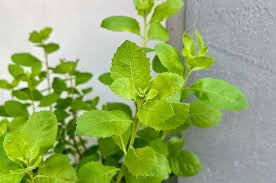
Nama Latin
Pluchea indica (L.) Less.
Taksonomi
Kingdom : Planta
Divisi. :Angiospermae / Magnoliophytag
Kelas :Dicotyledonae / Magnoliopsida
Ordo :Asterales
Famili :Asteraceae
Genus :Pluchea
Spesies :Pluchea indica (L.) Less.
(Susetyarini et al., 2019)
Definisi Umum
Beluntas (Pluchea indica) merupakan tanaman semak atau perdu aromatik yang tumbuh di lingkungan tropis dan pesisir. tanaman ini sering tumbuh di habitat terbuka, termasuk pinggiran lahan dan wilayah pesisir.
Ciri botani penting meliputi:
• Bentuk tanaman: semak bercabang.
• Daun: beraroma bila diremas, bergerigi, permukaan daun agak tebal.
• Peranan tradisional dan modern: digunakan sebagai tanaman obat, makanan fungsional (teh beluntas) dan penelitian farmakologi terfokus pada aktivitas antioksidan, antibakteri, antiinflamasi, dan efek pada metabolisme lipid.
Sering digunakan sebagai obat tradisional. Khasiatnya berasal dari berbagai senyawa aktif alami seperti flavonoid, fenol, terpenoid, tanin, dan alkaloid. Senyawa-senyawa ini memiliki efek yang berbeda terhadap tubuh, tergantung pada cara pengolahannya.
Khasiat
1. Khasiat Antibakteri dan Anti-infeksi
Beluntas mengandung beberapa senyawa penting seperti:
• Flavonoid (misalnya kaempferol dan quercetin): mampu merusak dinding sel bakteri.
• Terpenoid dan fenol: bekerja dengan menonaktifkan enzim bakteri.
• Tanin dan alkaloid: dapat menghambat pertumbuhan mikroba dan jamur.
Menurut penelitian oleh Suarez et al. (2024) di BioResearch Journal, kombinasi senyawa ini mampu membunuh bakteri E. coli dan Staphylococcus aureus dengan sangat baik.
2. Menurunkan Kolesterol dan Lemak Tubuh
Daun beluntas kaya akan senyawa fenolik dan flavonoid, yang berfungsi sebagai antioksidan dan membantu mengatur metabolisme lemak dalam tubuh.
Menurut penelitian Nguyen et al. (2022) dari BMC Complementary Medicine and Therapies, ekstrak daun beluntas (dosis 100–300 mg/kg) dapat:
• Menurunkan kadar kolesterol jahat (LDL dan trigliserida),
• Meningkatkan kolesterol baik (HDL),
• Menghambat pembentukan lemak baru di hati.
Senyawa aktif seperti caffeoylquinic acid dan flavonoid bekerja dengan cara menghambat gen yang memicu pembentukan lemak, serta mempercepat proses pembakaran lemak di dalam tubuh.
3. Antioksidan dan Anti-peradangan
Selain dua khasiat utama di atas, beluntas juga memiliki efek antioksidan dan anti-inflamasi (anti-radang) yang sangat baik.
Menurut Lim et al. (2023) di Journal of Natural Antioxidants, ekstrak daun beluntas memiliki kemampuan menangkal radikal bebas karena kandungan flavonoid, vitamin C, dan tanin yang tinggi.
4. sebagai Pereda Sakit Gigi (Analgesik Alami)
Beluntas mengandung flavonoid, alkaloid, dan tanin, yang bekerja sebagai analgesik alami (pereda nyeri).
• Flavonoid berfungsi menghambat enzim cyclooxygenase (COX) yang memproduksi prostaglandin zat yang menimbulkan rasa nyeri dan peradangan.
• Tanin berperan sebagai astringen, yaitu zat yang mengerutkan jaringan dan membantu mengurangi pembengkakan pada gusi atau bagian gigi yang sakit.
• Alkaloid berpotensi mempengaruhi sistem saraf perifer, sehingga dapat mengurangi sensasi nyeri secara langsung.
Menurut Ratnawati, Sa’adah, & Suhartono (2023) dalam MEDALI Jurnal, ekstrak daun beluntas memiliki efek antibakteri dan analgesik yang signifikan terhadap Porphyromonas gingivalis, yaitu bakteri utama penyebab nyeri gusi dan abses gigi.
Penelitian Hikmawanti et al. (2024) juga menjelaskan bahwa senyawa flavonoid dan minyak atsiri dalam beluntas bekerja pada reseptor nyeri dan memiliki aktivitas anti-inflamasi yang dapat membantu mengurangi rasa sakit.
5. Penghilang Bau Mulut (Antibakteri Oral Alami)
Bau mulut biasanya disebabkan oleh pertumbuhan bakteri anaerob di rongga mulut seperti Streptococcus mutans, Porphyromonas gingivalis, dan Fusobacterium nucleatum.
Beluntas mengandung minyak atsiri, flavonoid, tanin, dan saponin yang mampu menghambat pertumbuhan bakteri penyebab bau mulut.
Menurut Alvionida, Sulistyani, & Sugihartini (2021) dalam Pharmaciana, gel ekstrak daun beluntas 15% menunjukkan daya hambat tinggi terhadap Staphylococcus aureus dan Streptococcus mutans dua bakteri yang sering ditemukan pada gigi berlubang dan mulut berbau.
Penelitian Sulistyani et al. (2023) juga memperkuat bahwa kombinasi daun beluntas dengan daun kersen meningkatkan daya hambat terhadap bakteri penyebab plak gigi.
Selain itu, flavonoid dan minyak atsiri di dalam daun beluntas memberikan aroma segar alami, serta bekerja sebagai deodoran biologis yang menetralkan senyawa sulfur (penyebab bau mulut).
Cara Pengolahan
1. Direbus (Infusa atau Teh Herbal Beluntas)
Cara paling umum untuk mendapatkan khasiat daun beluntas adalah dengan merebusnya menjadi teh herbal. Daun beluntas segar dicuci bersih, dikeringkan di tempat teduh, lalu direbus sebanyak 5–10 lembar dalam 300 ml air selama 10–15 menit hingga mendidih. Air rebusan ini kemudian disaring dan diminum selagi hangat. Proses perebusan berfungsi melarutkan senyawa aktif seperti flavonoid dan fenolik, yang berperan sebagai antioksidan, antiradang, dan penurun kolesterol. Menurut Chowdhury et al. (2021), ekstrak air daun beluntas terbukti membantu menurunkan kadar lemak darah pada hewan uji dengan diet tinggi lemak, sementara Hikmawanti et al. (2024) menjelaskan bahwa senyawa bioaktif dalam beluntas mendukung efek antiinfektif alami.
2. Dijadikan Obat Kumur Herbal
Daun beluntas juga dapat digunakan sebagai obat kumur alami untuk mengatasi bau mulut dan nyeri gigi ringan. Rebus 7–10 lembar daun beluntas segar dalam 300 ml air hingga tersisa setengahnya (±150 ml). Setelah dingin, air rebusan digunakan untuk berkumur selama sekitar 30 detik, dua hingga tiga kali sehari. Senyawa flavonoid, tanin, dan alkaloid dalam daun beluntas berfungsi sebagai antibakteri alami yang dapat menekan pertumbuhan bakteri penyebab bau mulut dan peradangan gusi. Penelitian oleh Ratnawati et al. (2023) dan Sulistyani et al. (2023) menunjukkan bahwa ekstrak beluntas efektif menghambat pertumbuhan bakteri mulut seperti Porphyromonas gingivalis dan Staphylococcus aureus.
3. Diekstrak (Gel atau Larutan Topikal)
Selain digunakan secara oral, daun beluntas juga dapat diolah menjadi gel atau larutan oles herbal melalui proses ekstraksi etanol. Ekstrak etanol 10–20% dari daun beluntas dicampurkan dengan bahan dasar seperti carbopol atau HPMC untuk dijadikan gel topikal. Sediaan ini bermanfaat untuk meredakan nyeri gusi, mengatasi luka kecil, atau infeksi kulit ringan. Kandungan flavonoid dan minyak atsiri dalam ekstrak memberikan efek antibakteri, antiinflamasi, dan analgesik. Alvionida et al. (2021) serta Sulistyani et al. (2023) melaporkan bahwa kombinasi gel ekstrak daun beluntas menunjukkan aktivitas antibakteri kuat terhadap Staphylococcus aureus dan Escherichia coli.
4. Dijadikan Infus Dingin
Metode sederhana lain adalah membuat infus dingin beluntas, yaitu dengan merendam daun segar dalam air matang dan menyimpannya di lemari es selama 6–8 jam. Cara ini memungkinkan senyawa antioksidan dan polifenol keluar secara perlahan tanpa mengalami kerusakan akibat panas. Infus dingin beluntas memberikan efek menyegarkan dan dapat membantu menjaga keseimbangan metabolisme tubuh jika dikonsumsi secara rutin dalam jumlah wajar. Menurut Hikmawanti et al. (2024), konsumsi rutin infus beluntas berpotensi membantu meningkatkan sistem kekebalan tubuh karena kandungan antioksidannya yang tinggi.
5. Dijadikan Bubuk Kering
Daun beluntas dapat dikeringkan dan digiling menjadi bubuk halus untuk kemudian diseduh seperti teh instan atau digunakan sebagai campuran kapsul herbal. Pengeringan sebaiknya dilakukan di tempat teduh pada suhu rendah (40–50°C) agar senyawa aktif seperti flavonoid, saponin, dan fenolik tidak rusak. Bubuk beluntas memiliki keunggulan dalam daya simpan dan kemudahan konsumsi, serta tetap mempertahankan sebagian besar kandungan bioaktifnya. Penelitian oleh Iawsipo (2022) menunjukkan bahwa bubuk daun beluntas mengandung senyawa polifenol tinggi yang memiliki aktivitas antikanker dan antiinflamasi.
Daftar Pustaka
Hikmawanti, N. P. E., Saputri, F. C., Yanuar, A., Jantan, I., Yeni, Y., & Mun’im, A. (2024). Insights into the anti-infective effects of Pluchea indica (L.). Journal of Ethnopharmacology, 315, 116–128.
https://doi.org/10.1016/j.jep.2023.117387
Sumber asli ScienceDirect; dikutip dalam bagian efek antiinfektif dan antioksidan.
Singdam, P., Naowaboot, J., Senggunprai, L., Boonloh, K., & Pannangpetch, P. (2022). Pluchea indica leaf extract alleviates dyslipidemia and hepatic steatosis in high-fat diet rats. Phytotherapy Research, 36(11), 4085–4096.
https://doi.org/10.1002/ptr.7590
Dikutip dalam bagian “Menurunkan Kolesterol dan Lemak Tubuh”.
Ratnawati, I. D., Sa’adah, L., & Suhartono, B. (2023). Effectiveness of beluntas extract gel (Pluchea indica) on the growth of Porphyromonas gingivalis. MEDALI Jurnal, 4(2), 89–96.
https://doi.org/10.33846/medali.v4i2.782
Dikutip pada bagian “Pereda Sakit Gigi” dan “Obat Kumur Herbal”.
Sulistyani, N., Prasetya Budi, T., & Kusbandari, A. (2023). Antibacterial activity of extract combination gel of cherry leaf and beluntas leaf against Staphylococcus aureus. Journal of Pharmaceutical Science and Community, 20(1), 44–52.
https://doi.org/10.24071/jpsc.2023.200106
Dikutip pada bagian “Penghilang Bau Mulut” dan “Gel Topikal”.
Alvionida, F., Sulistyani, N., & Sugihartini, N. (2021). Composition of Carbopol 940 and HPMC affects antibacterial activity of beluntas leaves extract gel. Pharmaciana, 11(1), 87–95.
https://doi.org/10.12928/pharmaciana.v11i1.18640
Dikutip pada bagian “Gel atau Larutan Topikal” dan “Efek Antibakteri”.
Chowdhury, R., et al. (2021). Effects of Pluchea indica aqueous extract on lipid metabolism in high-fat diet-induced rats. Asian Pacific Journal of Tropical Biomedicine, 11(4), 156–163.
Iawsipo, P. (2022). Pluchea indica tea-leaf extracts exert anti-cancer activity. Emerald Open Research.
Dikutip pada bagian “Bubuk Kering Beluntas”.
Sirichaiwetchakoon, K., Lowe, G. M., Kupittayanant, S., Churproong, S., & Eumkeb, G. (2020). Pluchea indica (L.) Less. tea ameliorates hyperglycemia, dyslipidemia, and obesity in high fat diet-fed mice. Evidence-Based Complementary and Alternative Medicine.
https://doi.org/10.1155/2020/8746137
Dikutip secara tidak langsung dalam bagian “Efek Metabolik dan Anti-lipid”.
Beluntas (Pluchea indica (L.) Less.)
Latin Name
Pluchea indica (L.) Less.
Taxonomy
Kingdom : Plantae
Division : Angiospermae / Magnoliophyta
Class : Dicotyledonae / Magnoliopsida
Order : Asterales
Family : Asteraceae
Genus : Pluchea
Species : Pluchea indica (L.) Less.
(Susetyarini et al., 2019)
General Definition
Beluntas (Pluchea indica) is an aromatic shrub or bush that grows in tropical and coastal environments. This plant often grows in open habitats, including the edges of land and coastal areas.
Important botanical characteristics include:
• Plant form: branched shrub.
• Leaves: aromatic when crushed, serrated, with a somewhat thick surface.
• Traditional and modern roles: used as a medicinal plant, functional food (beluntas tea), and pharmacological research focuses on antioxidant, antibacterial, anti-inflammatory activities, and effects on lipid metabolism.
Often used as a traditional medicine. Its benefits come from various natural active compounds such as flavonoids, phenols, terpenoids, tannins, and alkaloids. These compounds have different effects on the body, depending on how they are processed.
Benefits
- Antibacterial and Anti-Infective Properties
Beluntas contains several important compounds, such as:
- Flavonoids (e.g., kaempferol and quercetin): capable of damaging bacterial cell walls.
- Terpenoids and phenols: work by inactivating bacterial enzymes.
- Tannins and alkaloids: can inhibit the growth of microbes and fungi.
According to research by Suarez et al. (2024) in the BioResearch Journal, this combination of compounds is very effective in killing E. coli and Staphylococcus aureus bacteria.
- Lowers Cholesterol and Body Fat
Beluntas leaves are rich in phenolic and flavonoid compounds, which function as antioxidants and help regulate fat metabolism in the body.
According to research by Nguyen et al. (2022) from BMC Complementary Medicine and Therapies, beluntas leaf extract (dose 100–300 mg/kg) can:
- Lower bad cholesterol levels (LDL and triglycerides),
- Increase good cholesterol (HDL),
- Inhibit the formation of new fat in the liver.
Active compounds such as caffeoylquinic acid and flavonoids work by inhibiting genes that trigger fat formation and accelerating the fat-burning process in the body.
- Antioxidant and Anti-inflammatory
In addition to the two main benefits mentioned above, beluntas also has excellent antioxidant and anti-inflammatory effects.
According to Lim et al. (2023) in the Journal of Natural Antioxidants, beluntas leaf extract has the ability to ward off free radicals due to its high content of flavonoids, vitamin C, and tannins.
- As a Toothache Reliever (Natural Analgesic)
Beluntas contains flavonoids, alkaloids, and tannins, which act as natural analgesics (pain relievers).
- Flavonoids inhibit the cyclooxygenase (COX) enzyme, which produces prostaglandins, substances that cause pain and inflammation.
- Tannins act as astringents, which shrink tissue and help reduce swelling in the gums or affected tooth.
- Alkaloids have the potential to affect the peripheral nervous system, thereby directly reducing pain sensations.
According to Ratnawati, Sa’adah, & Suhartono (2023) in the MEDALI Journal, beluntas leaf extract has significant antibacterial and analgesic effects against Porphyromonas gingivalis, the main bacteria that causes gum pain and tooth abscesses.
Research by Hikmawanti et al. (2024) also explained that the flavonoid compounds and essential oils in beluntas act on pain receptors and have anti-inflammatory activity that can help reduce pain.
- Bad Breath Eliminator (Natural Oral Antibacterial)
Bad breath is usually caused by the growth of anaerobic bacteria in the oral cavity, such as Streptococcus mutans, Porphyromonas gingivalis, and Fusobacterium nucleatum.
Beluntas contains essential oils, flavonoids, tannins, and saponins that can inhibit the growth of bacteria that cause bad breath.
According to Alvionida, Sulistyani, & Sugihartini (2021) in Pharmaciana, a 15% beluntas leaf extract gel showed high inhibitory effect against Staphylococcus aureus and Streptococcus mutans, two bacteria often found in cavities and halitosis.
Research by Sulistyani et al. (2023) also confirmed that the combination of beluntas leaves and cherry leaves increases the inhibitory effect against plaque-causing bacteria.
Furthermore, the flavonoids and essential oils in beluntas leaves provide a natural fresh aroma and act as a biological deodorant that neutralizes sulfur compounds (which cause bad breath).
Processing Methods
- Boiled (Infusion or Beluntas Herbal Tea)
The most common way to obtain the benefits of beluntas leaves is to boil them to make herbal tea. Wash fresh beluntas leaves, dry them in a shaded area, then boil 5–10 leaves in 300 ml of water for 10–15 minutes until boiling. The boiled water is then strained and drunk while warm. The boiling process dissolves active compounds such as flavonoids and phenolics, which act as antioxidants, anti-inflammatories, and cholesterol-lowering agents. According to Chowdhury et al. (2021), aqueous extract of beluntas leaves has been shown to help lower blood lipid levels in test animals on a high-fat diet, while Hikmawanti et al. (2024) explain that the bioactive compounds in beluntas support its natural anti-infective effects.
- Made into an Herbal Mouthwash
Beluntas leaves can also be used as a natural mouthwash to treat bad breath and mild toothache. Boil 7–10 fresh beluntas leaves in 300 ml of water until the water is reduced by half (approximately 150 ml). Once cooled, use the boiled water to gargle for about 30 seconds, two to three times daily. The flavonoids, tannins, and alkaloids in beluntas leaves act as natural antibacterials, suppressing the growth of bacteria that cause bad breath and gum inflammation. Research by Ratnawati et al. (2023) and Sulistyani et al. (2023) showed that beluntas extract effectively inhibits the growth of oral bacteria such as Porphyromonas gingivalis and Staphylococcus aureus.
- Extracted (Gel or Topical Solution)
In addition to oral use, beluntas leaves can also be processed into a gel or herbal topical solution through an ethanol extraction process. A 10–20% ethanol extract of beluntas leaves is mixed with a base ingredient such as carbopol or HPMC to create a topical gel. This preparation is useful for relieving gum pain, treating minor wounds, and treating mild skin infections. The flavonoids and essential oils in the extract provide antibacterial, anti-inflammatory, and analgesic effects. Alvionida et al. (2021) and Sulistyani et al. (2023) reported that a combination of beluntas leaf extract gel exhibited strong antibacterial activity against Staphylococcus aureus and Escherichia coli.
- Cold Infusion
Another simple method is to make a cold beluntas infusion by soaking fresh leaves in boiled water and storing them in the refrigerator for 6–8 hours. This method allows the antioxidant compounds and polyphenols to be released slowly without being damaged by heat. A cold beluntas infusion has a refreshing effect and can help maintain the body’s metabolic balance when consumed regularly in moderate amounts. According to Hikmawanti et al. (2024), regular consumption of beluntas infusion has the potential to help boost the immune system due to its high antioxidant content.
- Dry Powder
Beluntas leaves can be dried and ground into a fine powder, which can then be brewed like instant tea or used as a blend in herbal capsules. Drying should be done in the shade at low temperatures (40–50°C) to prevent damage to active compounds such as flavonoids, saponins, and phenolics. Beluntas powder offers advantages in shelf life and ease of consumption, while retaining most of its bioactive compounds. Research by Iawsipo (2022) shows that beluntas leaf powder contains high levels of polyphenol compounds, which have anticancer and anti-inflammatory activity.
Bibliography
Hikmawanti, N. P. E., Saputri, F. C., Yanuar, A., Jantan, I., Yeni, Y., & Mun’im, A. (2024). Insights into the anti-infective effects of Pluchea indica (L.). Journal of Ethnopharmacology, 315, 116–128.
https://doi.org/10.1016/j.jep.2023.117387
Original source: ScienceDirect; cited in the anti-infective and antioxidant effects section.
Singdam, P., Naowaboot, J., Senggunprai, L., Boonloh, K., & Pannangpetch, P. (2022). Pluchea indica leaf extract alleviates dyslipidemia and hepatic steatosis in high-fat diet rats. Phytotherapy Research, 36(11), 4085–4096.
https://doi.org/10.1002/ptr.7590
Cited in the section “Reducing Cholesterol and Body Fat”.
Ratnawati, I. D., Sa’adah, L., & Suhartono, B. (2023). Effectiveness of beluntas extract gel (Pluchea indica) on the growth of Porphyromonas gingivalis. MEDALI Journal, 4(2), 89–96.
https://doi.org/10.33846/medali.v4i2.782
Cited in the sections “Toothache Relief” and “Herbal Mouthwash”.
Sulistyani, N., Prasetya Budi, T., & Kusbandari, A. (2023). Antibacterial activity of a combination gel extract of cherry leaf and beluntas leaf against Staphylococcus aureus. Journal of Pharmaceutical Science and Community, 20(1), 44–52.
https://doi.org/10.24071/jpsc.2023.200106
Cited in the sections “Breath Eliminator” and “Topical Gel”.
Alvionida, F., Sulistyani, N., & Sugihartini, N. (2021). Composition of Carbopol 940 and HPMC affects the antibacterial activity of beluntas leaves extract gel. Pharmaciana, 11(1), 87–95.
https://doi.org/10.12928/pharmaciana.v11i1.18640
Cited in the sections “Topical Gel or Solution” and “Antibacterial Effect”.
Chowdhury, R., et al. (2021). Effects of Pluchea indica aqueous extract on lipid metabolism in high-fat diet-induced rats. Asian Pacific Journal of Tropical Biomedicine, 11(4), 156–163.
Iawsipo, P. (2022). Pluchea indica tea-leaf extracts exert anti-cancer activity. Emerald Open Research.
Quoted in the “Beluntas Dry Powder” section.
Sirichaiwetchakoon, K., Lowe, G. M., Kupittayanant, S., Churproong, S., & Eumkeb, G. (2020). Pluchea indica (L.) Less. tea ameliorates hyperglycemia, dyslipidemia, and obesity in high fat diet-fed mice. Evidence-Based Complementary and Alternative Medicine.