Nama Latin
Benincasa hispida
Taksonomi
Kingdom : Plantae – Plants
Subkingdom : Tracheobionta – Vascular plants
Superdivision : Spermatophyta – Seed plants
Division : Magnoliopsida – Flowering plants
Class : Magnoliopsida – Dicotyledons
Subclass : Dillenidae
Order : Violales
Family : Cucurbitaceae – Cucumber family
Genus : Benincasa Savi – benincasa
Species : Benincasa hispida (Thunb.) Cogn. – waxgourd
(USDA, 2009 dalam Zaini et al., 2011; Lim, 2012)
Definisi Umum
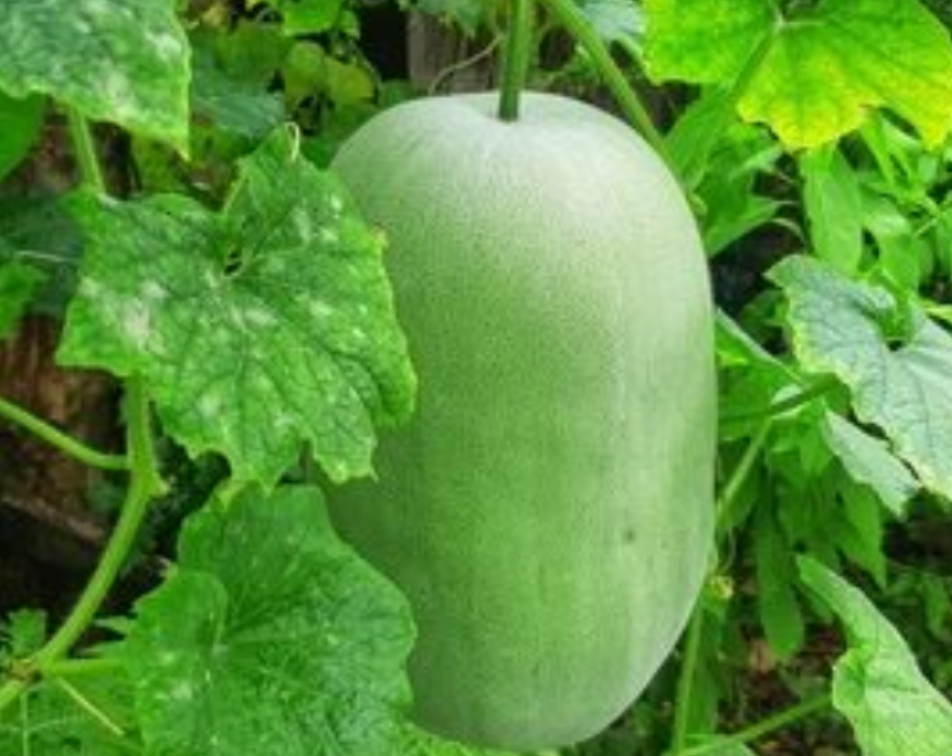
Tanaman bligo (Benincasa hispida) merupakan salah satu tanaman dari famili Cucurbitaceae yang tumbuh baik di daerah tropis dan subtropis, serta dikenal dengan berbagai nama seperti kundur atau labu lilin. Buahnya berukuran besar dengan ciri khas kulit yang pada saat matang dilapisi serbuk putih menyerupai lilin, sehingga sering disebut wax gourd. Meskipun rasanya tidak manis, bligo memiliki kandungan senyawa aktif seperti flavonoid, glikosida, karoten, vitamin, dan mineral yang memberikan berbagai manfaat, di antaranya sebagai antioksidan, antiinflamasi, antidiabetik, serta antimikroba. Selain bagian daging buah, kulit bligo juga berpotensi mengandung senyawa bioaktif yang dapat dimanfaatkan lebih lanjut dalam bidang kesehatan dan pengolahan pangan (Hakiki et al., 2021).
Kandungan
Bligo (Benincasa hispida) mengandung berbagai senyawa aktif seperti flavonoid, glikosida, karoten, vitamin, mineral, dan asam uronat. Selain itu, juga terdapat metabolit sekunder seperti alkaloid, saponin, dan beta-sitosterol. Pada bagian kulitnya, teridentifikasi sekitar 36 senyawa, dengan senyawa dominan antara lain adenosin, polidatin, morasin C, dan kushenol S yang termasuk golongan fenolik dan flavonoid berpotensi sebagai antioksidan (Hakiki et al., 2021; Babu et al., 2003; Zaini et al., 2011).
Khasiat
- Antioksidan (menangkal radikal bebas)
- Antiinflamasi (mengurangi peradangan)
- Antidiabetik (membantu mengontrol gula darah)
- Antimikroba (menghambat pertumbuhan mikroorganisme)
- Diuretik (melancarkan pengeluaran urin)
- Membantu gangguan pencernaan seperti diare dan maag
Cara Pengolahan
- Buah segar: dikupas, dicuci, lalu diolah menjadi jus, sup, atau direbus untuk dikonsumsi langsung.
- Jus bligo: daging buah diblender dengan air, bisa ditambahkan madu agar lebih mudah dikonsumsi.
- Simplisia (kulit/daging): dikeringkan (±5 hari), lalu dihaluskan menjadi bubuk untuk bahan ekstrak atau campuran herbal.
- Ekstrak: serbuk bligo direndam atau dipanaskan dengan pelarut seperti etanol, kemudian disaring untuk diambil ekstraknya.
Daftar Pustaka
Babu, S. C., Ilavarasan, R., Sahib Thambi Refai, M. A. C., Themeemul-Ansari, L. H., & Anil Kumar, D. (2003). Preliminary Pharmacological Screening of Benincasa hispida Cogn. Journal of Natural Remedies, 3, 143–147.
Hakiki, D. N., Fauziyyah, A., & Wijanarti, S. (2021). Aktivitas Antioksidan dan Screening Fitokimia Kulit Bligo (Benincasa hispida). ALCHEMY Jurnal Penelitian Kimia, 17(1), 27–36. https://doi.org/10.20961/alchemy.17.1.38675.27-36
Muley, B., Dhongade, H., Upadhyay, A., & Pandey, A. (2012). Phytochemical Screening and Anthelmintic Potential of Fruit Peels of Benincasa hispida (Cucurbitaceae). International Journal of Herbal Drug Research, 1, 5–9.
BLIGO (Benincasa hispida)
Latin Name
Benincasa hispida
Taxonomy
Kingdom: Plantae – Plants
Subkingdom: Tracheobionta – Vascular plants
Superdivision: Spermatophyta – Seed plants
Division: Magnoliopsida – Flowering plants
Class: Magnoliopsida – Dicotyledons
Subclass: Dillenidae
Order: Violales
Family: Cucurbitaceae – Cucumber family
Genus: Benincasa Savi – benincasa
Species: Benincasa hispida (Thunb.) Cogn. – waxgourd
(USDA, 2009 in Zaini et al., 2011; Lim, 2012)
General Definition
The bligo plant (Benincasa hispida) is a member of the Cucurbitaceae family that thrives in tropical and subtropical regions and is known by various names, such as kundur or wax gourd. Its fruit is large, characterized by a skin that, when ripe, is coated with a white powder resembling wax, hence the common name wax gourd. Although it is not sweet, bligo contains active compounds such as flavonoids, glycosides, carotenoids, vitamins, and minerals that offer various benefits, including antioxidant, anti-inflammatory, antidiabetic, and antimicrobial properties. In addition to the fruit flesh, the bligo skin also has the potential to contain bioactive compounds that can be further utilized in the fields of health and food processing (Hakiki et al., 2021).
Composition
Bligo (Benincasa hispida) contains various active compounds such as flavonoids, glycosides, carotenoids, vitamins, minerals, and uronic acids. In addition, it also contains secondary metabolites such as alkaloids, saponins, and beta-sitosterol. In the bark, approximately 36 compounds have been identified, with the dominant compounds including adenosine, polydatin, morasin C, and kushenol S, which belong to the phenolic and flavonoid groups and have potential as antioxidants (Hakiki et al., 2021; Babu et al., 2003; Zaini et al., 2011).
Benefits
Antioxidant (neutralizes free radicals)
Anti-inflammatory (reduces inflammation)
Antidiabetic (helps control blood sugar)
Antimicrobial (inhibits the growth of microorganisms)
Diuretic (promotes urine production)
Helps with digestive disorders such as diarrhea and stomach ulcers
Preparation Methods
Fresh fruit: Peel, wash, then process into juice, soup, or boil for immediate consumption.
Bligo juice: Blend the fruit pulp with water; honey may be added to improve the taste.
Raw materials (peel/flesh): dried (approx. 5 days), then ground into powder for use as an extract or in herbal mixtures.
Extract: Bligo powder is soaked or heated with a solvent such as ethanol, then filtered to obtain the extract.
References
Babu, S. C., Ilavarasan, R., Sahib Thambi Refai, M. A. C., Themeemul-Ansari, L. H., & Anil Kumar, D. (2003). Preliminary Pharmacological Screening of Benincasa hispida Cogn. Journal of Natural Remedies, 3, 143–147.
Hakiki, D. N., Fauziyyah, A., & Wijanarti, S. (2021). Antioxidant Activity and Phytochemical Screening of Bligo (Benincasa hispida) Peel. ALCHEMY Journal of Chemical Research, 17(1), 27–36. https://doi.org/10.20961/alchemy.17.1.38675.27-36
Muley, B., Dhongade, H., Upadhyay, A., & Pandey, A. (2012). Phytochemical Screening and Anthelmintic Potential of Fruit Peels of Benincasa hispida (Cucurbitaceae). International Journal of Herbal Drug Research, 1, 5–9.